Showing posts with label Canadian Politics. Show all posts

Wednesday, September 28, 2011

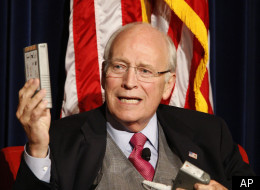
Amateur NDP and the Dick Cheney Protests


Former Vice President Dick Cheney's book tour was interrupted yesterday by protesters who argue Cheney is a war criminal who's admitted to torture. The protesters went on to attack police officers and choke on of the employees of the Vancouver Club venue.

Now, I expect the left-wing zealots to argue that interrogating 3 terrorists using water boarding, a process signed off by the US Justice Department as legal and which yielded tons of actionable intelligence is "torture". However, what surprised me is that Don Davies, the Immigration Critic in the NDP Royal Opposition (-shudder-) agrees and thinks Canada should have barred Cheney from entering the country.

The idea that "government in waiting" NDP would take such a stance regarding an American Vice President is preposterous and underscores the fact that the NDP is not ready for prime time. This isn't a government in waiting or a royal opposition, its a group of activists and partisans who've found themselves fortuitously on the brink of power.

Tuesday, August 16, 2011

Conservatives Restore Royal Candian Navy


Today, Defense Minister Peter McKay announced that the Canadian Navy and Canadian Air Force, which were stripped of their "royal" heritage back in 1968 by the revisionist and meddling Liberal federal government, would again be named the Royal Canadian Navy and the Royal Canadian Air Force.

As McKay points out, this would correct a historical mistake committed by a party that has committed to removing whatever links to Canada's colonial and British past it could, from renaming our armed forces to renaming our national day (eliminating Dominion Day in favour of the pedestrian-sounding Canada Day). This is a great decision, and an honour to the countless who served and died under the banners of the RCAF and RCN.

Of course, the NDP, ironically now the Royal Opposition, came out against this move, claiming its a step back to the 1950's. In fact, the NDP's Jack Harris even called it a divisive move! If honouring our past, knowing our own history and acknowledging the role the British crown has played in our country is divisive, then that would be a sad commentary on the shallowness of the Canadian story. For me, however, it's a honourable and wise move and just the first step along the way towards reclaiming our shared history and culture that has been whitewashed and ignored for too long.

Tuesday, March 16, 2010

An Open Letter to Justice Minister Rob Nicholson


Mr. Nicholson,
I am writing to express my strong support FOR the extradition of Marc Emery. I understand that a small group of MPs, unfortunately including one of your own Conservative colleagues, has presented a petition to you and asked for you not to sign the extradition order for Mr. Emery. Mr. Nicholson, I urge you to sign that extradition order. Marc Emery is a cheap provocateur and a tacky rabble-rouser. He clearly was not satisfied with the kid-glove treatment he has been getting from Canadian authorities for years, which I also do not support, and smugly decided to try his hand at selling drugs across an international border into the United States. It is well within the jurisdiction on the United States to punish Mr. Emery for these actions and Canada must not stand in the way. If Canada is to continue to be taken seriously on the international stage, we cannot cheapen our diplomatic efforts by refusing to honour our extradition treaties. Under the Extradition Act, we would have to claim that the United States has conducted "unjust or undue or oppressive actions" in order to justify refusing the extradition request and that is absurd. Marc Emery is petty agitator who rolled the dice and must now face the consequences of his actions. Let us not legitimize his "activism" by refusing the extradition request.
Thank you,
-Cory Redekop

Thursday, March 4, 2010

The 1990's is no excuse to ignore the deficit


With the federal budget out today, Canada is looking at 5 years of multi-billion dollar deficits still to come, going from a whopping 50 Billion this fiscal year to $27 billion next year to 17.5 billion the year after that and so on. To fight this ballooning debt, the Conservatives have sought to freeze departmental budgets and make some moves to tighten the fiscal belt, with much harder measures to come in following years. The reaction from the Liberals and NDP to this belt-tightening? They want to unbutton their pants and reach for seconds! The NDP is not supporting the budget because they want more spending on personal transfers, more spending on the environment, more spending on public sector wages, and the like. The Liberal leader, Michael Ignatieff, keeps insisting that there really is no deficit problem. After all, he notes, the ratio of debt to GDP is lower now than it was in the 1990's when the deficits were really bad. What Mr. Ignatieff fails to mention is that Canada had no choice but to tackle our deficits in the 1990's because Canada was about to have its bond rating reduced by international rating agencies. A lower bond rating means it would have been harder for us to get money to cover our deficits and we would have to offer higher interest payments to our lenders. We do not want to wait until we are back in that position before we start bringing the federal deficits and debt under control. We already spend over $30 billion a year servicing our public debt. That's money flushed away to our debt-holders that could go to any number of other programs. If we keep piling on billions to the debt just as interest rates rise from record lows, that debt servicing cost will rise. That's the real shame here as it literally forces future generations to pay for our spending. The Liberals and NDP should stop pushing for more spending and support the modest attempts to bring our deficits under control.

Thursday, February 25, 2010

Government should heed CD Howe's Advice


On Tuesday, the C.D. Howe Institute, one of Canada's leading public policy think tanks, recommended the Bank of Canada perform several quick and sharp increases to the key interest rate starting in June. The institute suggests the central bank "implement a 50 basis point hike at every six-week meeting starting in July and continuing through until mid-2011." I, along with many Canadians from the finance minister to Maclean's magazine, have voiced concern with the huge debt loads Canadians have taken on laregly due to the run-away housing market and ballooing mortage payments. Interest rates are currently as low as they can go. That's not hyperbole either, the rates are at 0.25% right now--any lower and the banks would be paying you to take out a loan. Interest rates have to go up, they will go up, and they should begin as soon as possible. This would cool the housing markets, slow inflation (which stands at 2% at the bottom of shaky recovery)and set our economy on more sustainable groud. We've tended to use low interest rates for every economic application in recent years. Interest rates were lowered to fuel the economny in boom times, they were lowered to prop up the economy when cracks began to show, they were lowered when the economy tanked and now they've been pushed to rock-bottom levels to help propel a recovery. Talk about a panacea! Low interest rates are not the cure-all for our economic woes. Without action soon these record low interst rates will only lead to damaging inflation-as the recovery really starts to take hold and commodities liek natural gas and oil surge-as well as a further inflation of a housing bubble that's really going to sting when it pops.

Wednesday, December 16, 2009

Bill Vander Zalm should have stayed out to pasture.

Now he's raising money for a constiutional challenge to the HST? After asking the Governor General to step in, which is laughable, he's now going to fight the HST in the courts. Why? If you could decipher his foaming-at-the-mouth tirade on CKNW last week, its because the HST is being forced upon BC by the federal government without BC's approval. Sorry, but he's wrong. A democratically elected provincial government is pursuing this shift. What'sundemocratic is a political dinosaur un-extincting himself to undermine the government. Get over it HST zealots. There's no conspiracy or scheme here. Its a policy you don't agree with. I get it. But enough with the rallies and court cases already. If you're still angry in 3 1/2 years when we are out of recession, the HST having done nothing but create jobs and increase efficiency, and the province humming along, then you can voice that anger at the polls. And maybe there will even be a washed-up flower magnate on the ballot for you all to rally around.

Monday, October 26, 2009

Bloodied, Bruised, and Live on CBC?


The new CBC News Network show "Power & Politics" made an embarrassing debut today when it covered the enviro-activists who disrupted Parliament today with their shouts and demands. I don't have a problem with the how covering the story, it was newsworthy, in so much that a bunch of provocateurs disrespected the central democratic institution in our country to get their eco-activism heard. Where CBC and host Evan Soloman went wrong is that they immediately brought a group of the protesters onto the show. This move suggests that the CBC misplaced its judgement when it switched studios over the weekend as giving these protesters a forum on live, national television only serves to encourage future activists to besiege Parliament to get their messages out. What's the consequence of breaking protocol and shouting at the House of Commons from the gallery? You get a live news segment. And in a flabbergasting display, CBC allowed one of the eco-activists to come on the show covered in cuts and blood, spouting off about his "mistreatment" at the hands of Parliament security. The CBC should have demanded the man wash up before appearing on the show. Allowing him to appear as he did is cheap sensationalism at its worst. Giving the protesters a forum to voice their concerns is bad enough, but to participate in such a stunt as to parade a bloodied and bruised protester onto live television to attack the government, the House, and security officials is appalling. If this is the "new" CBC, count me out.

Thursday, August 13, 2009

Why All the HST Hubbub?

The BC government is right to move towards a harmonized sales tax. Business groups and economists have been calling for this for years and it is a smart tax policy in this economic climate. HST will save businesses over $150 million and will save the province $30 million in administration costs from not having to deal with two different taxes from two different governments. Businesses will also stand to save nearly $2 billion on new investments and inputs. Canada and BC already lag other jurisdictions in research and development and investment spending and these savings will help spur greater business investment, greater competitiveness and a stronger BC economy. The new HST will be applied to nealy everything, doing away with the long list of goods that are currently exempt form the PST. This is where the NDP is making political hay and the public seems upset. But the PST exemptions are largely ridiculous. Tax should be applied across the board fairly to everything. Why do I pay tax on a wool scarf, but you don't pay tax on the wool to make it? Why should I pay no tax on news magazine while you pay tax on fashion magazines? Why is children's clothing tex exempt but not seniors' clothing? Why are pencils tax-free for college students but not tax free for my personal use on the Sunday crossword?These exemptions are largely unnessesary and are often taken advantage of. Having worked for a time in a clothing store, I can attest to the abuse of the tax free clothing for kids--many, many adults simply buy themselves items and them claim they are for some child to get the tax break. There's no need for such a hit-and-run, spotty tax policy. However, the government is providing some limited exemptions, which the critics often fail to mention; feminine hygeine products WILL be exempt, diapers WILL be exempt, as will basic groceries, kid's clothing, fuel, books and carseats. Plus, refundable tax credits (free cash) will be given quarterly to low-income individuals to help offset the new taxes.
There is no reason for all this HST hubbub. It is the same amount of tax, 12%, as now, just paid in one lump instead of split into two. The exemptions will change, but not as much as the critics claim, and not as much as I would argue they should. And those who will be impacted the most, will be given money to help them out. While I will admit that this debate should have been held during the recent election, where it was notably absent, the HST policy is smart, it is fair and it is being needlessly attacked.

Saturday, February 14, 2009

Campbell's Gang Solution

Premier Campbell has come up with some concrete solutions to the gang violence plaguing the lower mainland of late. Among his ideas are some good measures that I support: building more jails, banning body and car armour, and hiring more police officers and prosecutors. Unfortunatly, Campbell and his government have done little regarding this issue for years and are now scrambling to look tough as the public watches gunplay in the malls and on their streets. Attorney General Wally Oppal has for years been insisting that BC's sentences are not lenient and the system is working. Why then is he now trekking off to Ottawa to demand tougher sentences? The NDP pointed out yesterday that many jails and courthouses have been closed by the Campbell government over the last 8 years, which makes it difficult to trust Premier Campbell's convictions when it comes to building the new jails he has promised. While I applaude the measures the provincial government is advocating, when I go to the polls in May, I'll be thinking too little, too late.

Monday, December 1, 2008

Worth Fighting For

As a tepid Conservative supporter in the last election and a former Liberal party member, I can call each as I see it and this week I'm disappointed in both.
The Tories, staying true to their Reform roots, want to do away with the $1.75 the parties get for each vote they receive in elections. Beyond their ideological motives, Harper is doing this to kick his opponents while they are down. The Conservatives do a better job raising funds from private citizens, so they need the public funding less. Clearly, their strategic calcualtions lead them to conclude that cutting out this per-vote funding will only hurt them while it decimates the other parties. So much for Harper's claim that he wanted a better relationship with Parliament. He has a duty to earn the confidence of the House, and if he's not even going to try, what is he there for?
The Conservatives have been misrepresenting this issue. First, it is not a "subsidy." It is a grant to parties based on vote share. Nobody who voted Conservative is seeing their money go to the Bloq or the NDP or the Liberals and vice versa. And if you do not vote, you send no money anywhere. So it is essentially a donation to a party of your choice. Secondly, it is not the only source of public financing the parties receive. Nor is it the biggest. Parties that get more than 2% of the national vote get 50% of their election expenses reimbursed. And candidates that get 10% or more of the vote in their riding get up to 60% back from the government. This amounts to more than the per-vote money. Why aren't the Conservatives cutting this? Considering that they spend more than any other party during elections, they benefit the most from this.
Public funding of parties may sound distasteful, but it is integral to our political process. We have banned unions and corporations from donating and have severly restricted private donations in an effort to ensure that our politicians aren't bought. Undoing this would be a terrible idea. Most democracies follow this path and we have done it for years. If you want to debate the merits of this, fine, but do not sneak it into a fiscal update and make it a confidence motion as the Conservatives have done. By doing this, they deserve the backlash of the parties. And if voters were more educated on this matter, they'd have to deal with backlash from them too.
I'm disappointed that the Liberals have been unable to find an MP who can communicate this to voters. They have pretended that they are angry with the economic update. And while that does leave much to be desired, the real reason for all the coalition talk is the cuts to party funding. The Liberals should not be afraid to say so. If they could manage to communcate their ideas to voters, perhaps they wouldn't be in the dire situation they are in now. They allowed their leader, Dion, to be defined for a year before they bothered to communicate what he was all about. They let the Green Shift get bad mouthed for a year without ever explaining it to Canadians. If they can't explain why election financing is good, then they don't deserve to form government in a coalition. A fight for election financing is worth bringing down the government for, especially since it was snuck in to an economic bill that it had no place being. Don Martin wrote in the National Post that "while the merits of political funding might be worth a debate during calm prosperous times, it has no place on an agenda that should now be devoted to important decisions." The NDP and Liberals should not be afraid to tell Canadians what they are standing up for. If they don't, then there's no way Canadians will stand with them.

Tuesday, October 21, 2008

Why this Election was a Game Changer

Although conventional wisdom is that the Canadian federal election was an unnecessary, $300 million exercise in futility, it was in fact a game changer. How so? Because of the October 14 results, Canadians have seen the last of all of the major party leaders. The election of 2008 will go down as the last for Dion, Duceppe, Layton and Harper. The next time Canadians go to the polls, the political scene will look nothing like it does today. Everyone already knew that this election was Liberal leader Stephane Dion’s last, even before he announced his eventual resignation this week. Dion ran a disorganized campaign, allowed himself to be defined by Conservative ads for months, and was unable to connect or convince voters as his party was defeated. There are no consolation prizes in electoral politics, especially when you finish with the lowest number of seats in a generation and the lowest vote share since Confederation. Dion is done and the next election will see a new leader for the Liberals, likely chosen within the next few months. Gilles Duceppe, the Bloc Quebecios leader will not run in another election either; he barely ran in this one. Duceppe made it clear in 2007 that he wanted to get out of federal politics and lead the provincial Parti Quebecois in Quebec and only hung around for this federal election after another took the PQ position. Throughout this campaign, and especially during the debates, Duceppe seemed tired and uninterested. After 5 elections, I suspect Duceppe is tired of the political game in Ottawa. He’ll be gone come the next election. The NDP’s Jack Layton is finished too. Despite his best efforts to appear as Canada’s white, mustachioed Barack Obama, Layton was unable to realize the major gains he had foretold, gaining only 8 seats and improving the NDP vote share by less than 1%. The NDP had high hopes for Quebec and BC but was unable to win big in either. This was Layton’s 3rd election and there are rumblings that the lone Quebecois NDP MP, Thomas Mulcair may be itching to replace him. There are others in the party who say Layton has moderated the party too much and has abandoned their ideals. Either way, Layton will have a hard time staying on as leader; he’ll be gone by the next election. Finally, I predict that Conservative leader Stephen Harper will face a challenge to his leadership. Harper has run in 3 elections now, and while each showing has improved upon the last, he was unable to win a majority government when given the dual gifts of a vote split between four left wing parties and the most unappealing, ineffectual Liberal leader in decades. If Harper could not deliver a majority in this election with this political climate, will he ever be able to? You better believe that this question is being asked by conservatives across the country. Harper has done a good job building the party around himself, leaving little room for others to flourish. But he can only run a one-man ship for so long before challengers like Peter McKay, John Baird, or perhaps Peter Van Loan begin questioning his leadership, especially if the Liberals select a dynamic leader to replace Dion and the probability of a Harper-led majority declines. Whether he is forced out by a leadership review or he steps down when the writing on the wall becomes clear, Stephan Harper will be gone by the next election too. Many Canadians were exasperated with this election. Many found it unnecessary, many thought the platforms and campaigns were largely uninspiring and there was little change in regards to the composition of the House of Commons. But Canadians should be thankful for having an election this year! Sure it may have been our fourth election in eight years, and sure it may have been dull compared to the drama of the United States’ election, but because of the 2008 results, our next election is bound to be more interesting: the political landscape will change dramatically and four completely new party leaders will be ready to vie for our votes. And there’s nothing boring about that.

Monday, October 13, 2008

The Nasty Campaign

"...Team Obama that, in fact, has run, via appendages, the far more vicious race.

Obama and his surrogates have repeatedly engaged in racial politics (as Bill Clinton lamented when in fury he denounced the "race card"). When there was never evidence that McCain was using race as a wedge issue, it was clear Obama most surely was--preemptively, on at least two occasions--warning Americans he would soon be the victim of opposition racial stereotyping.

His surrogates like Biden and those in the Senate continue to link legitimate worries about Obama's past with racism. Second, for about 3 months all we've heard are references to McCain's age, with adjectives and phrases like confused, can't remember any more, disturbed, lost his bearings, etc.

Moreover, so far, McCain supporters have not broken into Biden's email, or accused Biden of being a Nazi, or accused anyone of not bearing one of their own children, or photo-shopped grotesque pictures of Obama on the Internet (as in the Atlantic magazine case). I don't think deranged McCain supporters in Hollywood or television almost daily are quoted as damning Obama in unusually crude terms. Nor are white racist ministers calling McCain a 'messiah' or McCain operatives fraudulently swarming voter registration centers. And on and on."

-Victor Davis Hanson
http://www.realclearpolitics.com/articles/2008/10/jumping_ship.html

Friday, September 19, 2008

Buck Up, Canada!

The Canadian federal election, after an agonizingly slow start, has now kicked into high gear. With the politicians crisscrossing the country campaigning, the party websites up and functioning, and the airwaves filled with partisan ads and commercials, it must be time for the traditional wringing of the hands over the negativity of our political campaigns. The media partakes in this willingly: our newscasts offer up polls on who is the ‘nastiest’ leader and our newspapers run columns denouncing the mean-spiritedness of the campaign so far. And individual Canadians are again complaining that our politics is too dirty, too harsh. This is absurd. This campaign has offered little in the way of negativity, with the exception of a pooping puffin. There has yet to be anything in the way of a controversial attack, a personal insult or a smear campaign—nothing. Canadians seem to hold this ideal of a friendly and civil campaign, but we must remember that on October 14 the country is holding an election, not a harvest ball; we are not electing a homecoming queen, we are electing a head of state. And in this contest there is no prize for congeniality and there’s no award for good sportsmanship. Only one person can claim victory on election night and it should not be based on who ran the campaign with a smile. Elections must be adversarial as they are competitions to see who is most capable to lead our country. The leaders have to display to us why they are the best choice (by presenting their ideas and qualifications) but they must also demonstrate why the other choices are wrong (by attacking and undermining the other guys.) Some people tend to confuse any ad or comment that questions or challenges the opponent as wrong. But this is not dirty pool, its politics and politics is meant to be a contact sport. By making those who seek office compete for our votes, we can see how our perspective leaders will handle challenges. If a candidate is confronted during the campaign, it is an opportunity for him to showcase his knowledge, wit, political skill and fortitude. If a party leader can’t handle a criticism during the campaign, how is he going to handle similar criticisms or attacks when they come from an aggressive Russian President, an angry European envoy, or a protectionist American Congress? The Prime Minister’s Office is not the place to first see how our leaders handle adversity; the campaign trail is. Our electoral system depends on allowing candidates to draw these kinds of distinctions between themselves and their opponents without being labeled as ‘negative’. If we were to do away with all kinds of negativity and make our politicians play nice, our elections would be even duller, our candidates less tested, and our democracy worse off. So buck up, Canada! The campaign has just started and if you think it’s too rough-and-tumble now, it is just getting warmed up.

Monday, September 8, 2008

The Consortium and the Censorship

The so-called media 'consortium' that decided today NOT to allow Green Party leader Elizabeth May into the leader's debates should reconsider. If in 2008 the Green Party cannot break into mainstream Canadian politics, then it will likely never be. When has the environment ever been such talked-about, high-profile topic? The answer is never. Global warming and climate change are gigantic issues and the Greens speak directly to those voters who see them as paramount. With neither of the two dominant parties having done much of anything on this front for years, it is completely acceptable to allow another party their chance to campaign on the environment.
The Green Party of Canada ran a full slate of candidates (308) in 2006 and will run another full slate (minus 1, as per the agreement with Liberal leader Dion) this time around. That's much more than the Bloq Quebecois ever runs. In fact, the BQ has never run more than 75 candidates since they only run in Quebec, yet they are routinely included in the national leader's debate. This leads to the absurd situation where millions of Canadians are watching a leader debate for whom they cannot ever vote for. The Greens, however, are a national party. They received nearly 4.5% of the vote last election and now have a sitting member of Parliament in West Vancouver-Sunshine Coast MP Blair Wilson. In fact, as May points out, it was the existence of the one lone Bloc MP that helped then-BQ leader Lucien Bouchard nap a spot in the leader's debate in the 1993 election. With 5% of the vote, a sitting MP member, and an central issue that has never been so pressing or so palpable, the time is right for the Green Party to enter the leader's debate. Let Elizabeth May in.

Wednesday, July 23, 2008

Why I Have Little Empathy for Omar Khadr

Omar Khadr was front and centre in the news this week as tapes of his interrogation were released and Canada's army of bleeding hearts and ultra-liberals called for him to be returned to Canada immediately in light of the "torture" he was enduring in Guantanamo Bay. In truth, the interrogation footage I've seen is mild. There's no screaming or violence. The interrogators are calm. Khadr is fed and has had access to medical care. I see no torture. All I see is a young extremist being forced to lie in the bed him and his family have made.
I admit, Omar Khadr is young, having been captured in Afghanistan at the young age of 15. However, I do not consider him to be a child soldier. Child soldiers are recruited by brutal regimes around the world, from the Sudan to Burma, and they are usually not 15 year old extremists who are sympathetic to the cause. Child soldiers are young children (note: not teenagers) who are forced to fight. Khadr is and has been a willing participant in his families disgraceful and dangerous association with Osama bin Laden and Muslim extremists. There are videos of Omar Khadr helping construct bomb materials for use on Western forces (including Canadian soldiers) in Afghanistan, and he was captured after an hours-long firefight, which ended when one of the two American medics who were checking for survivors was blown up by a grenade tossed by either Khadr or one of his comrades, killing 28 year old Christopher Speer. Khadr was and is an enemy combatant, an extremist and a terrorist. Yes, he was only 15, but he remains those things nonetheless. 15 is not a child. At 15 years, you know right from wrong, and Khadr knew that he and his family were out to fight the Western world, to fight all those who did not follow Islam.
Omar Khadr undoubtedly was shaped and influenced by his parents, especially his father. But does that excuse his actions? Do we let him go, patting the scamp on the head while chuckling "boys will be boys?" No. We must treat him as the terrorist he is, regardless of how he got to this point. Why his family is allowed to live in Toronto to this day, espousing their hatred and doctrine to others is another story. It is a disgrace that the Khadr family is allowed to live freely in Canada, and is allowed to bleed our health care system of tens of thousands of dollars to pay for their other son, Omar's younger brother Abdulkareem, who was paralyzed during another firefight in the Middle East, this time alongside Papa Khadr.
Omar Khadr's story is a sad one. It is terrible that more was not done to prevent the parents of this twisted family from indoctrinating their children and transforming them from innocent boys to Muslim extremists. However, it is now done. Omar Khadr is now a 21 year old extremist sitting in a detention centre for being involved with the Taliban, Al Qaeda, and Osama bin Laden. No one in Canada should be held without trial or charges or access to a lawyer. Those are rights we hold dear and if this were to happen to any Canadian anywhere in this great country, it should be stopped immediately. But this is an different circumstance. This is war. This is terrorism. And Omar Khadr should have thought of that before he helped kill troops in Afghanistan. Canada should request that the United States proceed with a trial immediately, as those legal rights are fundamental. But it is the United States' jurisdiction to hold the trial, as it was their national who was killed. Beyond that, Canada should not seek to get Khadr returned, as I doubt he would get the severe treatment that he deserves. I can far too easily imagine the image of young Omar being returned home to his family in Toronto after Canada's backwards legal system set him free and allowed him to return to his family of spies, saboteurs and terrorists. Khadr's lawyers, his family, and the bleeding hearts in this country would like to see Canadians, awash in sympathy and empathy, demand that Omar be brought home. But luckily, there are a few too many Canadians who share opinions like mine for that to happen.

Thursday, June 12, 2008

The Residential Schools Apology

As a rule, I do not favour governments issuing formal apologies for past deeds. It does us no good to drag up past mistakes and grievances. For the most part, we all know certain things were done by governments of the past that were inappropriate and sad: the persecution of the Dukhobors, the internment of Japanese Canadians in WWII, the Komagata Maru incident. But the years that have passed allow us a perspective not available to the people at the time, and to condemn those who made such decisions is to ignore all context and history. Yes, what was done looks horrible to us today. But some of our decisions will likely appear barbaric or idiotic to future generations and no good comes from bashing those who came before you. That being said, the aboriginals who were sent to government supported residential schools absolutely deserve an apology. Children were ripped from their families and their culture and were emotionally, physically and in some cases sexually abused. Instead of welcoming First Nations into the broader society, we sought to viciously assimilate them by means of abuse and torture. This was not a single act perpetrated years and years ago, nor was it a policy thought up during war time like the examples above. The residential schools remained open well into the 1980's. The schools ran for decades upon decades, pushing tens of thousands of aboriginal youth through their process of cultural erasure. And now there are generations of First Nations who do not know their culture, their language, their customs, or in some cases their family. It is understandable that the government wanted to bring aboriginals into the greater society, to welcome them into the fold like we do with so many immigrants today. But they did not integrate them, or welcome them, or work with them. Instead, they attacked and abused them for decades. The results of this exercise are grim and are present in today's society. Canada's treatment, even today, of some of its aboriginal peoples is an embarrassment for us all. This apology will go a long way to reconciling Canada with its aboriginal population, it will expedite the healing process, it will begin to bring aboriginals back into the rest of society, and this apology will help us bridge the wide gap between our violent past and an eventual bright future.

Thursday, May 29, 2008

Appeal the Safe Injection Site Ruling

The federal government is right to appeal the BC Supreme Court decision that stated closing the Vancouver safe-injection site would be unconstitutional. The judge, Mr. Ian Pitfield, felt that it violated the Charter of Rights and Freedoms to deny addicts the site for safe injection-drug use. The addicts' Charter rights guarantee life, liberty and security, and the court felt that closing the site and forcing these people into the streets and alleys would violate those rights and put them at risk. Justice Pitfield stated in court that "there is much to be said against denying addicts health care services that will ameliorate the effects of their condition". The court got this one wrong and the government should move to appeal this immediately, not because of the injection site itself, but because of the precedent this ruling sets and the preposterous claim that injecting illegal drugs with immunity from the law is a Charter right. The fact is that there are many services available for addicts and the health care system is open to them if they need any medical attention whatsoever. Contrary to what the judge believes, drug addicts are not being denying health care services. They can go to a walk-in clinic, they can go to a hospital, they can go to a detox program, they can get any number of services if they so wish. Perhaps there would be a case for arguing that there should be more money spent on such services, but equating a cubicle used for injecting drugs with vital health care services is a flawed assessment. 'Insite', the safe-injection site, is not a constitutional right. Society should not be bound to enable and assist drug addicts by the court's interpretation of our Constitution. That being said, 'Insite' should be granted another year-long exemption from drug laws. It is a noble experiment that is saving lives, slowing disease and reducing harm while we search for better solutions. But it is not a Charter right and the government is right to move quickly to appeal the decision that it is.

Sunday, May 4, 2008

Stop Griping Over Bill C-50

There's been much griping from the opposition parties and immigration activists recently in response to the changes proposed to Canada's immigration system included in the 2008 budget implementation bill. People have levelled charges against the government that it is racist, xenophobic and the like. But the NDP, some Liberals, and the immigrant-lobby need to stop foaming at the mouth and get a grip of reality. First, Canada has long been generous in its welcoming of immigrants, so the charges that Canada's government is racist are unfounded. If any country should be able to tinker with its immigration system without being subject to such insults it is Canada. Second, our immiragtion system needs repair. There's almost a 6 year, 1 million person backlog. We have no way of prioritizing immigrants based on skills and expertise. We can't even successfully deport immigrants who break the laws as we've seen over and over again (most recently with the Laibar Singh case - http://www.nationalpost.com/news/canada/story.html?id=407204)
So the changes proposed by the government are long overdue. These changes would allow the Immigration Minister to give orders to agents and officials to prioritize certain classes of immigrant claims. For example, Canada is starving for doctors and nurses, so let's bump those immigrants who are doctors and nurses to the front of the line. The Canadian economy can't find enough masonry workers or welders? Why not prioritize those immigrants who have those skills? Immigration should work for both the immigrant and the country, and its been a one way street for too long--it's time the Canadian economy and Canadian society got more out of this deal.
Canada has every right to decide to fast-track immigrants with relevant skills who are looking to start a new life and build new Canadian families. And if this comes at the expense of immigrants in line for family-reunification (those are the grandparents, parents, spouses, partners, children, and orphaned nieces and nephews that every Canadian can sponsor) than too bad. There will still be plenty of room for those type of immigrants, as there has always been. I just see no problem with Canada granting citizenship to a few more surgeons and a few less grandmothers. Is it not fair to say one will contribute more than the other? Are we all too afraid to point that out? Let's foster those immigrants who are the best and brightest, those who want to contribute to building a better Canada, rather than those who feel entitled to transplant their entire social network here.
Canada has every right to prioritize its immigrants. It has every right to decide who gets to immigrate, how many, and how long it will take. The opponents of these changes are the same activists who think immigration is a right and demand that Canada must accept everyone, all the time, without exception. Canada is a country that welcomes immigrants from around the world and has been for decades. It's too bad our elected officials can't propose changes and reforms to the system without being attacked and berated. But for what it's worth, the government's got my vote on this one.

Tuesday, April 15, 2008

Canada & the Chinese Olympics

On CKNW radio this morning there was a guest who insisted that Canada should not boycott the Olympics in China. - Ok.
He said boycotts do not work and aren't effective. - Ok.
He insisted that we'd be better to engage China like neighbours rather than isolate and provoke them. - Ok.
He also maintained that we should be careful what action we take in regards to China because of the high numbers of Chinese immigrants in Canada. - What?

Am I the only one who thinks that sets a dangerous precedent? Should Canada really be beholden to the loyalties of our immigrant communities? Canada must be able to make foreign policy decisions in the best interests of Canada and Canadians. And these decisions have to be made independent of attachments, loyalties and allegiances that immigrant communities may have to their home countries. Of course, immigrants must have their voices heard like every Canadian, but they should be voicing concern for Canada and Canada's interests.
It would be alarming if we determined which human rights abuses are ok based on how large that ethnic population is in Canada. Is genocide, or torture or oppression acceptable if there's a lot of those nationals living in Canada?
I hope not.